Robotic surgery is becoming increasingly common today. It represents the most advanced form of minimally invasive surgery. Since excision surgery for endometriosis is complex, it is an excellent indication for the application of this cutting-edge technology.
What is robotic surgery?
As mentioned, it is a minimally invasive surgical technique. As in conventional laparoscopy, therefore, the operation is performed through small incisions, through which the robotic instruments are introduced. The surgeon sits at the robotic console and views the surgical field in three dimensions with great precision. At the same time, the surgeon controls the robotic instruments, which “carry out” the surgeon’s commands with great precision, completing the operation with maximum safety. It is therefore clear that the robot does not perform the operation on its own; it simply transmits the surgeon’s movements with great precision within the patient’s pelvis.
Because the technique is minimally invasive, it is associated with a rapid return to everyday activities, an improved cosmetic result and less postoperative pain. The advantages, however, do not stop there. Let us look at where robotic surgery offers benefits compared with conventional laparoscopy.
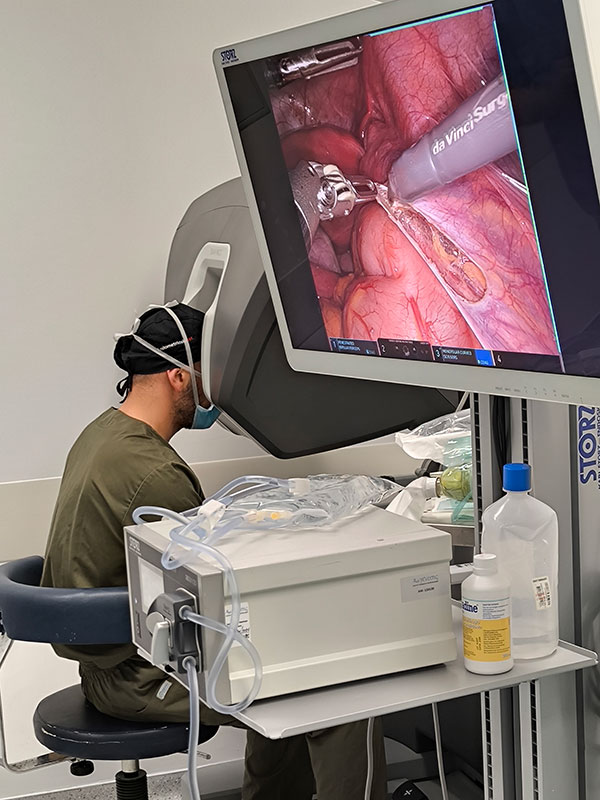

Where does robotic surgery offer advantages over laparoscopy?
Compared with conventional laparoscopy, the advantages include:
- Better visualisation of the surgical field
- Greater freedom of movement of the surgical instruments within the operating field
- Higher surgical precision and, consequently, less traumatic handling of the tissues
Why robotic surgery for endometriosis?
In endometriosis specifically, as we have noted many times, we are dealing with a disease that carries significant surgical challenges. In infiltrating endometriosis, organs are often adherent to one another because of adhesions, causing significant distortion of the anatomy. In ovarian endometriosis, distinguishing healthy tissue — and separating the endometrioma from the healthy part of the ovary — can prove difficult.
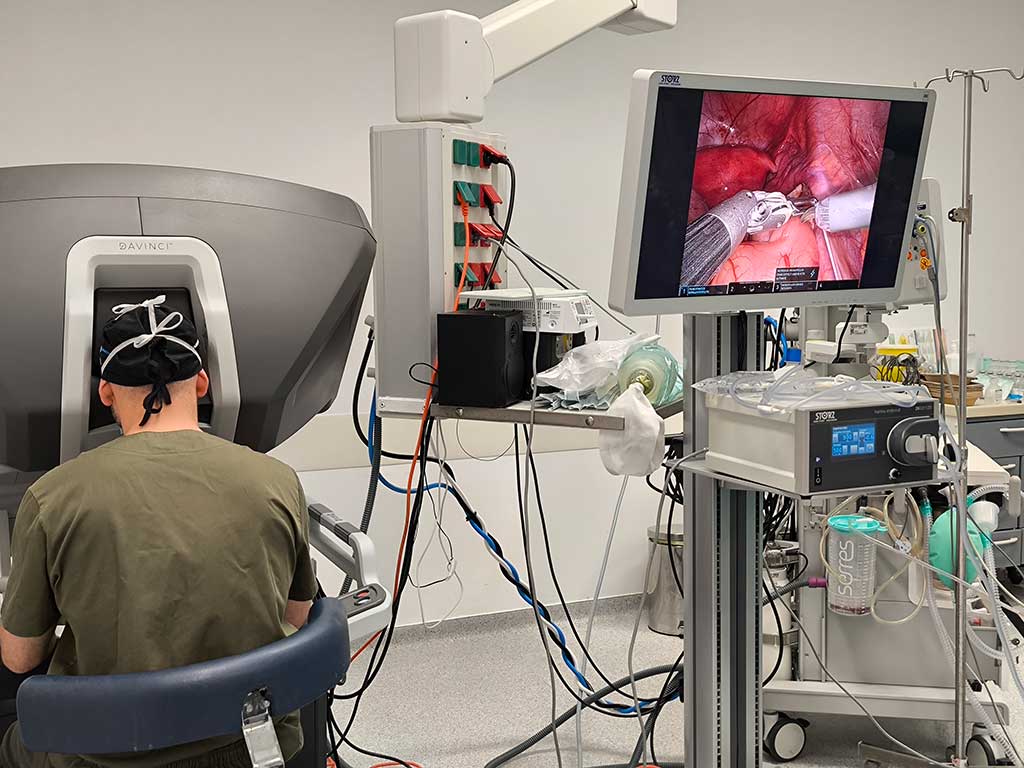
Consequently, the important advantages of robotic surgery mentioned above acquire particular value in endometriosis cases, as they can facilitate the dissection of the tissues while reducing the risk of injury. Since many endometriosis operations are performed in young women who wish to improve their fertility, minimal trauma to the ovaries is likely to lead to better outcomes in terms of ovarian reserve.
It is important, however, to keep the following in mind. First, at the present time there is no substantial body of scientific evidence demonstrating the superiority of robotic surgery over conventional laparoscopy in terms of patient benefit. In addition, complex endometriosis cases are also feasible with conventional laparoscopy, as was the case in the years before robotic surgery was introduced.