
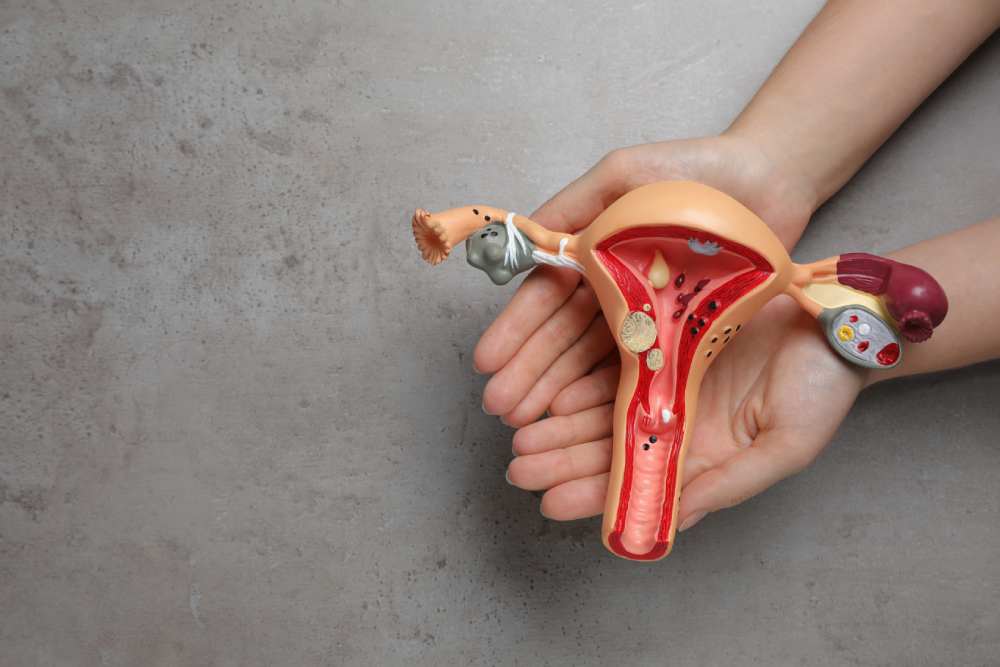
We have frequently discussed AMH (Anti-Müllerian Hormone), a hormone whose blood levels are commonly used as a marker of ovarian reserve. However, AMH has often been mistakenly labelled as a ‘predictor of fertility’ in women, despite studies showing that it has no value in predicting the likelihood of spontaneous conception (i.e. without assisted reproduction). On the other hand, AMH levels in women with ovarian endometriosis (endometrioma, or ‘chocolate cyst’ of the ovary) are of particular interest, as several studies have shown lower AMH levels and a more rapid decline in these women compared to those without endometriosis.
But is there a correlation between endometrioma size and AMH levels? Logically, we might expect that the larger the endometrioma, the lower the AMH. This could result from the compressive effect of a large cyst on the adjacent healthy ovarian tissue, as well as from the inflammatory process itself, which is likely more advanced in larger endometriomas.
Paradoxically, a recent study found quite the opposite. Patients with larger endometriomas had higher AMH levels. In this cross-sectional study from Iran (doi: 10.1038/s41598-025-51256-w), the researchers enrolled 210 subfertile patients: 150 had endometriosis affecting one or both ovaries, and 60 had male-factor subfertility with no diagnosed endometriosis. Although women with endometriosis had slightly lower AMH levels compared to those without, the difference was not statistically significant. However, within the endometriosis group, AMH levels were significantly higher in women with large endometriomas (>5 cm) compared to those with smaller cysts (<3 cm). In the statistical analysis, endometrioma size was an independent predictor of AMH levels.

These findings are not unique in the literature supporting this paradoxical relationship. Two earlier French observational studies reported similar results: Marcellin et al. (doi: 10.1016/j.fertnstert.2019.01.013) found that AMH levels increased with increasing endometrioma size. Similarly, Roman et al. (doi: 10.1016/j.rbmo.2020.09.008) observed that pre-operative AMH levels were higher in women with endometriomas larger than 6 cm.
How might these findings be explained? While no straightforward answer is available, several possible theories have been proposed. One is that larger endometriomas are associated with increased vascularisation, which in turn leads to greater absorption of locally produced AMH into the systemic circulation. Additionally, based on a study by Kitajima et al., cells from the wall of an endometriotic cyst show histological similarities to ovarian granulosa cells — the very cells that produce AMH. Finally, the authors acknowledge a potential selection bias in their sample: women with large endometriomas and low ovarian reserve are more likely to have already undergone surgery prior to the study, meaning that those included may represent a subgroup with relatively preserved ovarian reserve.
Although definitive conclusions cannot be drawn — given the cross-sectional study design, the risk of selection bias, and the small number of patients with endometriomas larger than 5 cm — it is important to bear in mind that interpreting AMH in the context of larger endometriomas requires caution. A satisfactory AMH value does not necessarily reflect a reassuringly normal ovarian reserve. Decisions regarding the management of subfertility in these cases must be multifactorial, with AMH representing only one piece of the overall puzzle. The authors conclude that further studies are needed to confirm or refute this finding, and to clarify its clinical significance in the context of assisted reproduction outcomes.