
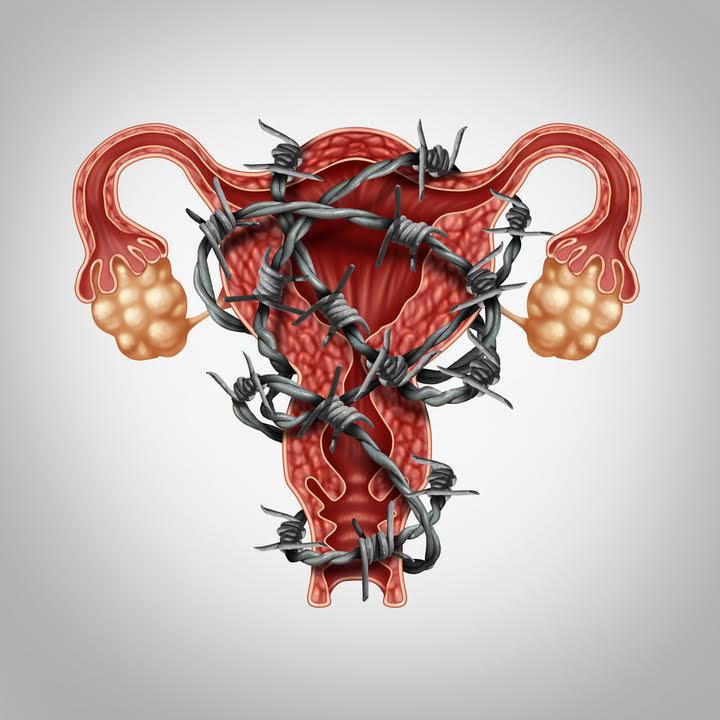
We recognise 3 types of endometriosis. Of note, the 3 types are based on anatomic criteria (so to say, where the lesions of endometriosis are located), therefore, there is not always a clear correlation between the type of the disease and the type or severity of symptoms.
- Superficial Peritoneal Lesions (SUP): This is considered to be the mildest form of the disease. We can identify lesions that are located superficially on the peritoneum (the thin, transparent membrane that covers the organs of the pelvis).
- Ovarian Endometriomas: Benign ovarian cysts, also known as ‘’chocolate cysts’’. The wall of the cyst contains foci of endometriosis. The cyst contains old blood, giving the characteristic dark brown colour. The presence of ovarian endometriomas is considered to be a manifestation of more severe disease.
- Deep Infiltrating Endometriosis (DIE): The most severe form of disease. The foci of endometriosis infiltrate the tissues in a depth of at least 5mm below the peritoneum. In this form, endometriosis can infiltrate organs such as the bowel, the bladder, the ureters, the nerves etc.